Saturday, October 10, 2015

Hanoi

Oh by the way: 

The entire family went to Hanoi, Vietnam in January this year.  This is my and Marvin's first time to visit a country twice in a period of 7 months. Must be love.

Well, perhaps not exactly love.  If I'm being totally honest, I'd say we picked Hanoi because it's a perfect destination for budget-constrained travellers who want to tick off another UNESCO World Heritage Site in their bucket list.   Hanoi is of course the jump off point for Ha Long Bay. 

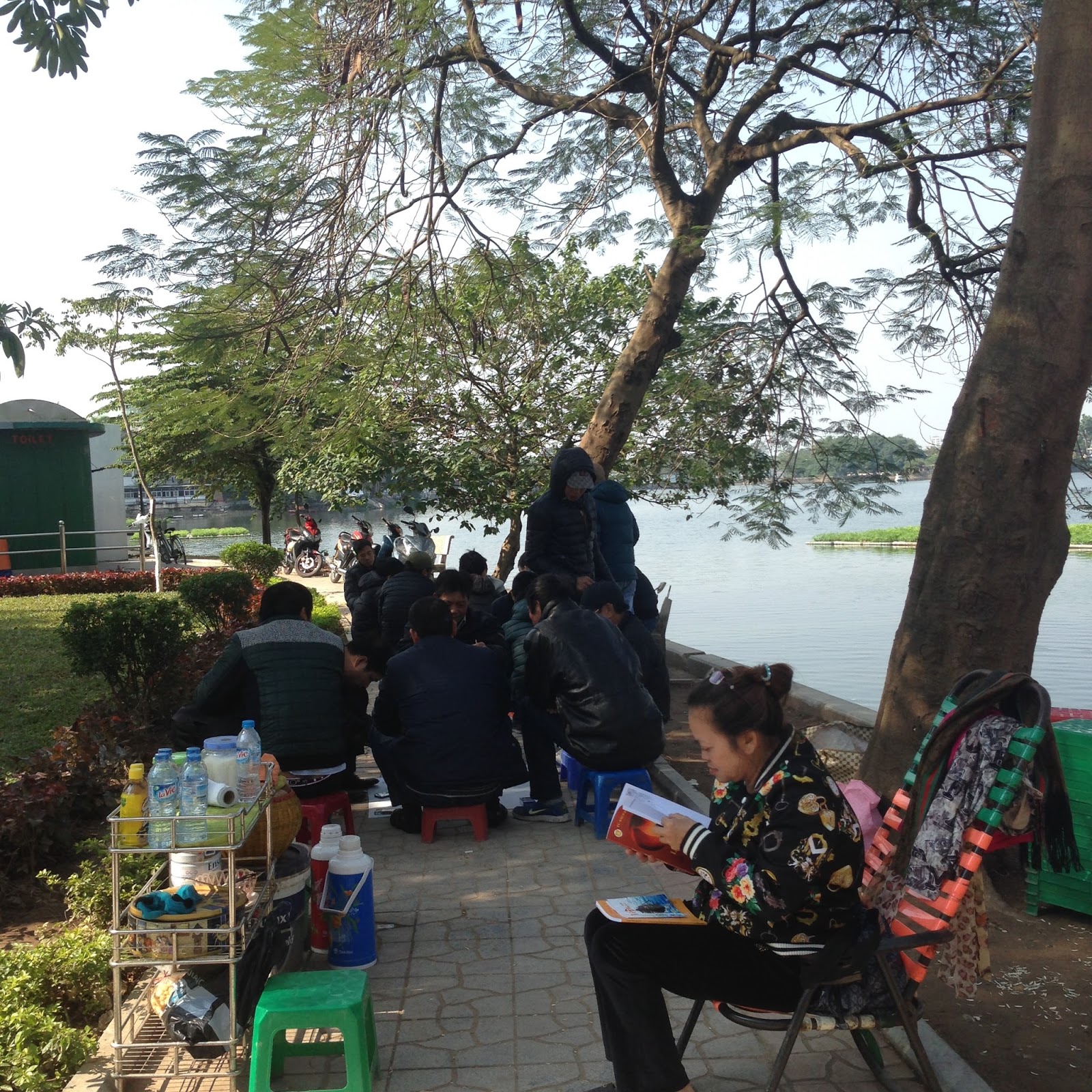
Hanoi didn't disappoint, and not only because of the majestic sceneries of Ha Long Bay and Tam Coc.  The city is a destination in itself - charming and cool. I loved how their lakes are well cared for and prettified.  Baguio's Burnham Park and San Pablo, Laguna can take a lesson or two from Hanoi when it comes to making lakes a buffer against the city's noise and chaos, a place where tired commuters and workers can wind down and breathe in nature in the midst of urban clutter.  

Unfortunately, our cities here have a particular talent for ruining what's naturally beautiful with tackiness. I think we're uncomfortable with negative space. We want to fill a perfectly good spot for quiet with stalls and noise and all the things that we think make a space fun. You'd probably say, but that's who we are as a people; we love to have fun, boisterous fun. And we should just embrace it.  We're just being authentic. 

No, we're not. We're being shallow. We can't see what makes Manila beautiful and so we don't hold those things sacred. We reclaimed a huge portion of Manila Bay only to fill it with buildings that lack imagination. Look at that hideous tower at Star City. Look at those buffet restaurants at SM By the Bay that don't even afford its patrons a view of the bay. Look at the decay around the old Film Center. Look at Intramuros now brimming with illegal settlers. Look at the condos that have grown out of marshlands. 

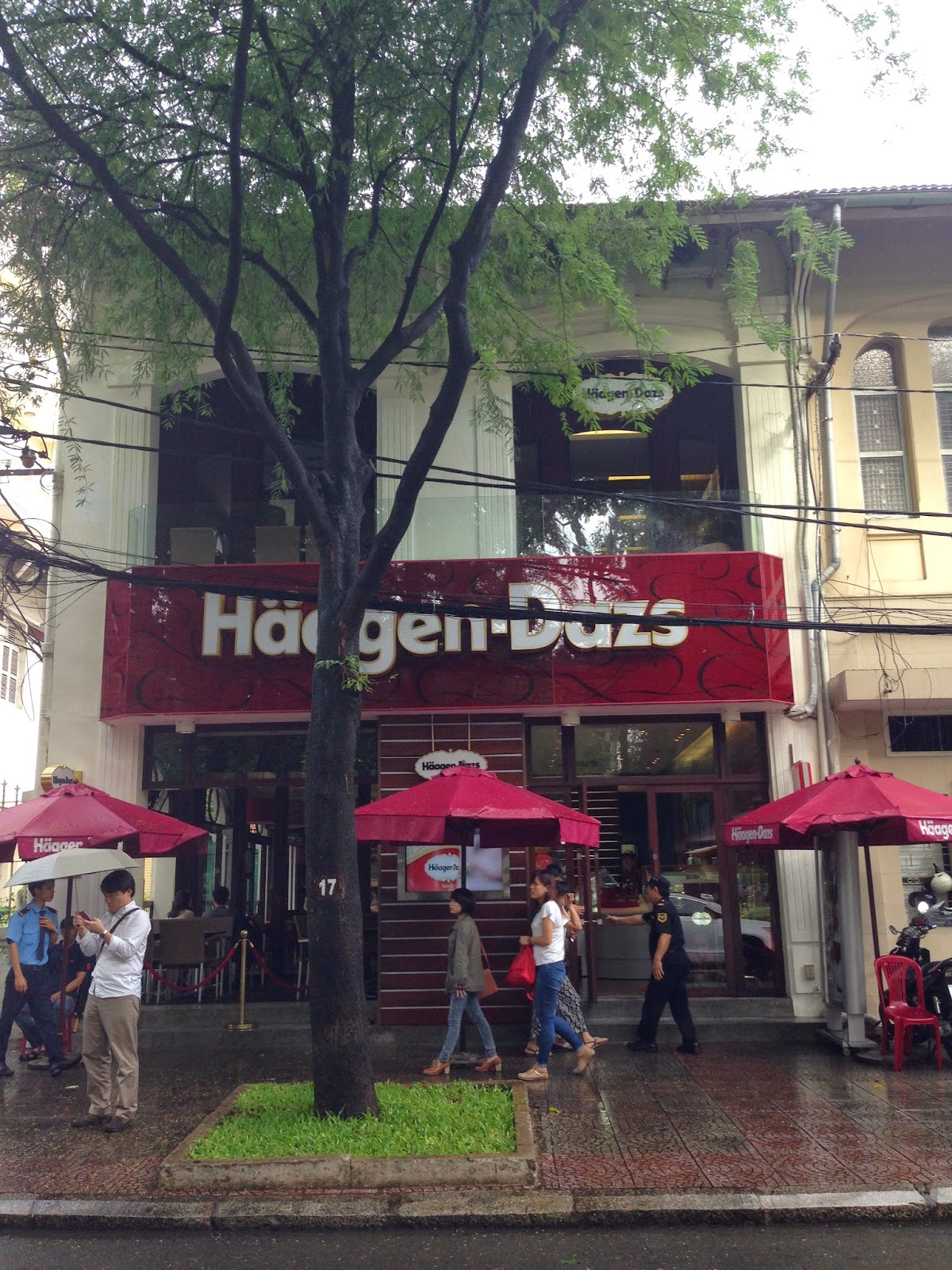
Hanoi is by no means the most beautiful city but it doesn't take whatever magic it has for granted. It knows what makes it beautiful and flaunts them. It crowns its lakes with flower beds and benches.  Beautiful old French buildings are maintained and updated. 

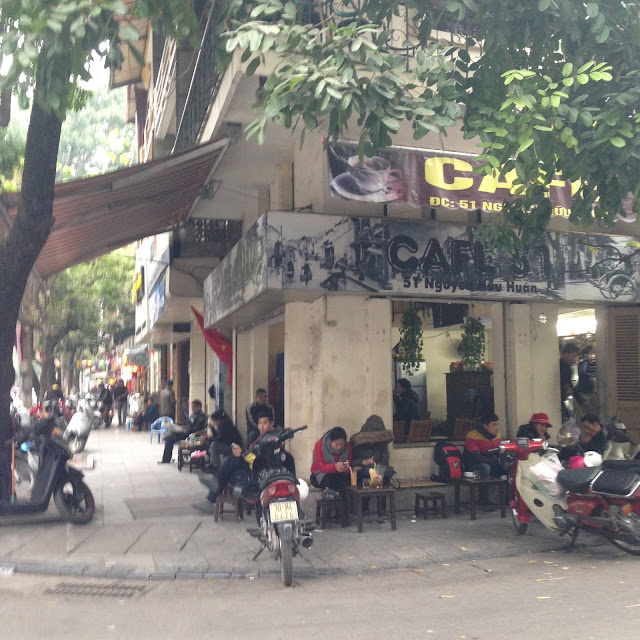
It does have its share of what other cities may consider 'nuisance' like makeshift kitchens and food stalls right along pedestrian lanes. But in Hanoi this nuisance kind of makes sense.  It's a picture of the 'old' blending with the 'new', 'traditional' with 'modern'.  It gives you a sense of Hanoi holding on to its traditional way of life even as it makes way for progress.  

I know of course that a few days in a city doesn't give me a complete picture of the place.  Our short visit has afforded me to see only the good parts of Hanoi, and so those are the things that stayed with me. 

But Manila I know so very well.  This is my home; I'm intimate with both its pretty and ugly parts. I know the dark secrets of its innards and alleys. And the ugliness could be all that I see if I allow it. So I don't, and everyday I actively seek Manila's beauty.  It's a matter of perspective anyway, and so I see what I seek.




Tuesday, May 26, 2015

Calvary Love


by Amy Carmichael

If I belittle those whom I am called to serve, talk of their weak points in contrast perhaps with what I think of as my strong points; if I adopt a superior attitude, forgetting "Who made thee to differ? And what hast thou that thou hast not received?" then I know nothing of Calvary love.
If I find myself taking lapses for granted, "Oh, that's what they always do," "Oh, of course she talks like that, he acts like that," then I know nothing of Calvary love.

If I can enjoy a joke at the expense of another; if I can in any way slight another in conversation, or even in thought, then I know nothing of Calvary love.

If I can write an unkind letter, speak an unkind word, think an unkind thought without grief and shame, then I know nothing of Calvary love.

If I do not feel far more for the grieved Savior than for my worried self when troublesome things occur, then I know nothing of Calvary love.

If I can rebuke without a pang, then I know nothing of Calvary love.

If my attitude be one of fear, not faith, about one who has disappointed me; if I say, "Just what I expected" if a fall occurs, then I know nothing of Calvary love.

If I am afraid to speak the truth, lest I lose affection, or lest the one concerned should say, "You do not understand," or because I fear to lose my reputation for kindness; if I put my own good name before the other's highest good, then I know nothing of Calvary love.

If I am content to heal a hurt slightly, saying "Peace, peace," where there is no peace; if I forget the poignant word "Let love be without dissimulation" and blunt the edge of truth, speaking not right things but smooth things, then I know nothing of Calvary love.

If I hold on to choices of any kind, just because they are my choice, then I know nothing of Calvary love.

If I am soft to myself and slide comfortably into self-pity and self-sympathy; If I do not by the grace of God practice fortitude, then I know nothing of Calvary love.

If I myself dominate myself, if my thoughts revolve round myself, if I am so occupied with myself I rarely have "a heart at leisure from itself," then I know nothing of Calvary love.

If, the moment I am conscious of the shadow of self crossing my threshold, I do not shut the door, and keep that door shut, then I know nothing of Calvary love.

If I cannot in honest happiness take the second place (or the twentieth); if I cannot take the first without making a fuss about my unworthiness, then I know nothing of Calvary love.

If I take offense easily, if I am content to continue in a cool unfriendliness, though friendship be possible, then I know nothing of Calvary love.

If I feel injured when another lays to my charge things that I know not, forgetting that my sinless Savior trod this path to the end, then I know nothing of Calvary love.

If I feel bitter toward those who condemn me, as it seems to me, unjustly, forgetting that if they knew me as I know myself they would condemn me much more, then I know nothing of Calvary love.

If souls can suffer alongside, and I hardly know it, because the spirit of discernment is not in me, then I know nothing of Calvary love.

If the praise of others elates me and their blame depresses me; if I cannot rest under misunderstanding without defending myself; if I love to be loved more than to love, to be served more than to serve, then I know nothing of Calvary love.

If I crave hungrily to be used to show the way of liberty to a soul in bondage, instead of caring only that it be delivered; if I nurse my disappointment when I fail, instead of asking that to another the word of release may be given, then I know nothing of Calvary love.

If I do not forget about such a trifle as personal success, so that it never crosses my mind, or if it does, is never given room there; if the cup of flattery tastes sweet to me, then I know nothing of Calvary love.

If in the fellowship of service I seek to attach a friend to myself, so that others are caused to feel unwanted; if my friendships do not draw others deeper in, but are ungenerous (to myself, for myself), then I know nothing of Calvary love.

If I refuse to allow one who is dear to me to suffer for the sake of Christ, if I do not see such suffering as the greatest honor that can be offered to any follower of the Crucified, then I know nothing of Calvary love.

If I slip into the place that can be filled by Christ alone, making myself the first necessity to a soul instead of leading it to fasten upon Him, then I know nothing of Calvary love.

If my interest in the work of others is cool; if I think in terms of my own special work; if the burdens of others are not my burdens too, and their joys mine, then I know nothing of Calvary love.

If I wonder why something trying is allowed, and press for prayer that it may be removed; if I cannot be trusted with any disappointment, and cannot go on in peace under any mystery, then I know nothing of Calvary love.

If the ultimate, the hardest, cannot be asked of me; if my fellows hesitate to ask it and turn to someone else, then I know nothing of Calvary love.

If I covet any place on earth but the dust at the foot of the Cross, then I know nothing of Calvary love.

That which I know not, teach Thou me, O Lord, my God

Tuesday, September 2, 2014

The Mental Virtues


Thank you, David Brooks, for this piece. I need a sort of framework on (workplace) virtues that embody my idea of strength of character. Thank God there's nothing here about picking up rubbish, following traffic rules and wearing the right shoes.

"We all know what makes for good character in soldiers. We’ve seen the movies about heroes who display courage, loyalty and coolness under fire. But what about somebody who sits in front of a keyboard all day? Is it possible to display and cultivate character if you are just an information age office jockey, alone with a memo or your computer?


Of course it is. Even if you are alone in your office, you are thinking. Thinking well under a barrage of information may be a different sort of moral challenge than fighting well under a hail of bullets, but it’s a character challenge nonetheless.

In their 2007 book, “Intellectual Virtues,” Robert C. Roberts of Baylor University and W. Jay Wood of Wheaton College list some of the cerebral virtues. We can all grade ourselves on how good we are at each of them.

First, there is love of learning. Some people are just more ardently curious than others, either by cultivation or by nature.

Second, there is courage. The obvious form of intellectual courage is the willingness to hold unpopular views. But the subtler form is knowing how much risk to take in jumping to conclusions. The reckless thinker takes a few pieces of information and leaps to some faraway conspiracy theory. The perfectionist, on the other hand, is unwilling to put anything out there except under ideal conditions for fear that she could be wrong. Intellectual courage is self-regulation, Roberts and Wood argue, knowing when to be daring and when to be cautious. The philosopher Thomas Kuhn pointed out that scientists often simply ignore facts that don’t fit with their existing paradigms, but an intellectually courageous person is willing to look at things that are surprisingly hard to look at.

Third, there is firmness. You don’t want to be a person who surrenders his beliefs at the slightest whiff of opposition. On the other hand, you don’t want to hold dogmatically to a belief against all evidence. The median point between flaccidity and rigidity is the virtue of firmness. The firm believer can build a steady worldview on solid timbers but still delight in new information. She can gracefully adjust the strength of her conviction to the strength of the evidence. Firmness is a quality of mental agility.

Fourth, there is humility, which is not letting your own desire for status get in the way of accuracy. The humble person fights against vanity and self-importance. He’s not writing those sentences people write to make themselves seem smart; he’s not thinking of himself much at all. The humble researcher doesn’t become arrogant toward his subject, assuming he has mastered it. Such a person is open to learning from anyone at any stage in life.

Fifth, there is autonomy. You don’t want to be a person who slavishly adopts whatever opinion your teacher or some author gives you. On the other hand, you don’t want to reject all guidance from people who know what they are talking about. Autonomy is the median of knowing when to bow to authority and when not to, when to follow a role model and when not to, when to adhere to tradition and when not to.

Finally, there is generosity. This virtue starts with the willingness to share knowledge and give others credit. But it also means hearing others as they would like to be heard, looking for what each person has to teach and not looking to triumphantly pounce upon their errors.

We all probably excel at some of these virtues and are deficient in others. But I’m struck by how much of the mainstream literature on decision-making treats the mind as some disembodied organ that can be programed like a computer.

In fact, the mind is embedded in human nature, and very often thinking well means pushing against the grain of our nature — against vanity, against laziness, against the desire for certainty, against the desire to avoid painful truths. Good thinking isn’t just adopting the right technique. It’s a moral enterprise and requires good character, the ability to go against our lesser impulses for the sake of our higher ones.

Montaigne once wrote that “We can be knowledgeable with other men’s knowledge, but we can’t be wise with other men’s wisdom.” That’s because wisdom isn’t a body of information. It’s the moral quality of knowing how to handle your own limitations. Warren Buffett made a similar point in his own sphere, “Investing is not a game where the guy with the 160 I.Q. beats the guy with the 130 I.Q. Once you have ordinary intelligence, what you need is the temperament to control the urges that get other people into trouble.”

Character tests are pervasive even in modern everyday life. It’s possible to be heroic if you’re just sitting alone in your office. It just doesn’t make for a good movie."


Wednesday, August 13, 2014


"A real leader is somebody who can help us overcome the limitations of our own individual laziness and selfishness and weakness and fear and get us to do better things than we can get ourselves to do on our own."

- David Foster Wallace

Tuesday, August 5, 2014

Anthony's Vietnam


Even before having set foot in it, I have already decided that Vietnam is one damn cool place.  Anthony Bourdain made that decision for me long time ago when he declared in No Reservations his love for Vietnam (particularly Saigon) and how he feels so connected to the place. And I’m the one who believes everything Anthony says because he’s the coolest traveler in my book.


So you could say that the main reason why I wanted to visit Vietnam was to see for myself how a tiny Southeast Asian country found a special place in Anthony’s Ramones-loving heart.  Well, I have some theories.  For one, the Vietnamese, I think, are one of the world’s most kick-ass people (Anthony loves kick-ass).  They’re fighters and survivors.  Just look at how they’re standing up against Chinese intimidation in the West Phil Sea! And they’re so spunky they require visa for their colonial masters of yore (Americans and French).

Then of course there’s the FOOD! The food is sooo right in every way (the coffee though was, surprisingly, a disappointment).  You realize just by walking the city streets dotted with ambulant vendors that there’s infinitely more to Vietnamese food than the more well-known exports banh mi and pho.  The food culture is unapologetic and authentic.  It doesn’t try to suit your western preferences and expectations.  It is what it is, so grab a stool in some suspicious looking alley and eat your pho. 

Authenticity.  That’s the vibe of this city. You feel it even in those parts that have been gentrified. It’s Quiapo and Greenbelt co-existing in District 1.  There are kids in house clothes playing right along the frontage of some posh boutique (I think it was in Rex Hotel?) while their father sells kitsch nearby.   In fact, right beside that posh store is a general merchandise stall, the kind you see in Divi. I can’t imagine that happening in Ayala 6750.   

One of the things that usually strike me in most foreign cities is that you don’t see a lot of policemen and store guards around, sometimes not even one. In Saigon, I didn’t notice guards in the stores but I saw a few policemen (or were they military?) who all seemed to look not older than 25. They also slouched.  And so even if they wore a stern communist uniform, they looked like they can’t even intimidate a kitten (what more a city mouse Pinoy?).  

Marvin badgered me to rent a motorbike to see more parts of the city.  I wasn’t really up to it at first because I felt that that was too much of an adventure for parents with kids waiting back home.  You can’t blame me because in Manila, riding a motorbike in the city feels like a rogue adventure.  But I’m glad I gave in to Marvin’s badgering because the motorbike was the best part of the trip.  It wasn’t as scary as I imagined it would be because the streets were filled with mostly just motorbikes. The streets are not like EDSA brimming with bully buses, egotistic cars and rascal jeepneys. And, the concept of lurking traffic officers and traffic violations seems lost on this city.  Might be wrong but that’s how it felt. So it was fun!

Then there’s the seeming Vietnamese penchant for the narrow and tight: the traditional dress (Ao dai) is long and tight; the houses in the city are tall and skinny (I later learned that this design was tax-induced);   vendors can do their stuff (cook and sell) in a space no bigger than a circle with a diameter the length of an outstretched arm.  I mean, those Cu Chi tunnels weren’t made by claustrophobics!  And look at the shape of Vietnam on the map -it’s long and narrow (They got shabby and took away some coastal parts from Cambodia). 

For someone who doesn’t get Anthony, it’s probably hard to see what makes Vietnam so endearing to him. It’s not culturally glamorous, hygiene is questionable in some foodie spots, people are not really as warm as Pinoys… But I’ve seen enough of Anthony’s shows to understand what he likes about a place or an experience.   Vietnam doesn’t play bull.   The Vietnamese know who they are as a people and don’t apologize for it.  And it shows.  Spunk is cool.


Look Ma, no pesky jeep (only bikes :)

i wish we have a park as lush as this right smack in the metro

taken at a public toilet. leave your footwear, or else....


food. it's all about FOOD


breakfast scene

night life in Pham Ngu Lao district


Hey, Jollibee!

District 7 //not your idea of HCM


That's the Rex Hotel I was telling you about